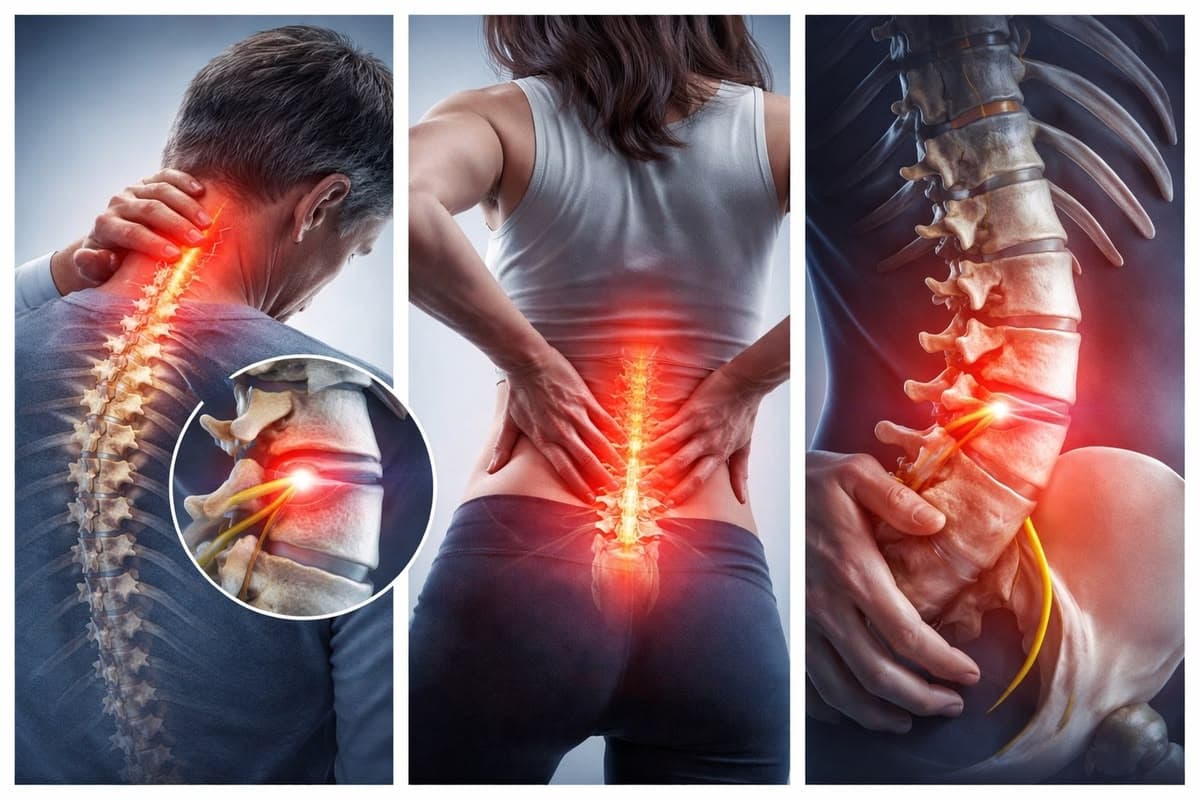
Back Pain: What Actually Works, A Physiotherapist's Honest Guide
AK
Dr. Arbaz Khan
Physio Team · Rawalpindi
September 29, 2026
23 min read
Back Pain
Back Pain
M
Mediplex Health Care Centre
Rawalpindi · Physiotherapy & Recovery
If your back hurts, you have probably already heard a dozen opinions. Rest for two weeks. Never lift anything again. Buy a special mattress. Get an MRI right away.
Some of that advice is outdated, and some of it can slow your recovery. The good news is that most back pain is not dangerous, and most people improve with the right approach.
This guide explains what causes back pain, what the evidence says works, what doesn't, and when to get help. It is written by a physiotherapy team that sees patients from Islamabad and Rawalpindi every week, so the advice is practical, not theoretical.
What works best for most back pain is staying gently active, doing guided exercises, understanding your pain, and getting a proper physiotherapy assessment if it doesn't settle. Bed rest, long-term painkiller use, and fear of movement usually make things worse.
What Is Back Pain? A Plain-Language Explanation
Back pain is pain, stiffness, or tension anywhere along your spine, from the base of your neck down to your tailbone. Most people feel it in the lower back, where the spine carries the most load.
Your back is a team, not a single part. It includes:
Real reviews from real patients on our Google profile.
Google review
“Great physiotherapy experience! The staff was caring, professional, and supportive. I felt comfortable throughout and noticed genuine improvement after treatment.”
Emaan Rafaqat
2 weeks ago
Limited same-day slots
Ready to book an appointment?
Whether you're recovering from an injury or just want to move without pain. We're here.
Vertebrae: the stacked bones that protect your spinal cord.
Intervertebral discs: the cushions between the bones.
Muscles and ligaments: the paraspinal muscles, erector spinae, core muscles, and gluteal muscles that hold you upright.
Spinal nerves: the pathways that carry signals to your legs and arms.
Joints: including the facet joints and the sacroiliac joint at the pelvis.
When any of these is irritated, overloaded, or stiff, you feel it as backache.
Types of Back Pain
Doctors and physiotherapists usually describe back pain in three ways.
Acute back pain lasts less than six weeks. It often follows a lift, a twist, or a long day at a desk.
Sub-acute back pain lasts between six and twelve weeks.
Chronic back pain lasts longer than twelve weeks. It usually needs a broader plan than rest and tablets.
Location matters too. Lower back pain is the most common. Upper back pain and middle back pain are also frequent, especially in people who work at screens all day. If your upper back and neck are the main problem, read our desk worker neck and shoulder guide.
"Non-Specific" Back Pain: What That Really Means
Many people are told they have "non-specific low back pain." It sounds vague, but it is actually reassuring. It means no serious disease, fracture, or nerve damage was found. The pain is real, but the cause is a mix of muscle, joint, movement, and lifestyle factors, not one damaged part.
The NICE guideline on low back pain and sciatica covers this in detail. It recommends exercise, manual therapy, and psychological approaches over routine scans and long-term medication.
Why Back Pain Matters in Pakistan, Islamabad, and Rawalpindi
Back pain is one of the most common reasons people seek healthcare worldwide. The World Health Organization's low back pain fact sheet describes it as a leading cause of disability globally and notes that the number of affected people is expected to keep rising.
Pakistan's lifestyle adds its own pressures. Here are the factors we see most in the twin cities.
Desk jobs and long hours. Office workers in Blue Area, F-7, F-10, G-9, and I-8 often sit for eight to ten hours with little movement.
Long commutes. Sitting in traffic between Rawalpindi and Islamabad strains the lower back, especially with poor seat support.
Floor sitting and low seating. Traditional seating without back support increases stiffness for many people.
Heavy lifting at home. Carrying water, groceries, and children affects mothers and caregivers in particular.
Low activity levels. Many people have little time or space for regular exercise.
Stress and poor sleep. Both make pain feel stronger and last longer.
Delayed care. Many people wait months, trying home remedies and tablets, before seeing a specialist.
The last point matters most. The longer back pain is left alone, the more the body adapts to guarding and avoiding movement. That is when acute pain becomes chronic.
What Causes Back Pain?
Most back pain doesn't come from one dramatic injury. It builds up from small, repeated stresses. Here are the most common causes, roughly in order of how often we see them.
Everyday Mechanical Causes
Muscle strain or ligament sprain from lifting, twisting, or sudden movement.
Poor posture during long sitting, driving, or phone use.
Muscle imbalance, such as weak core and glute muscles with tight hip flexors and hamstrings.
Muscle spasm, where the muscles tighten protectively after irritation.
Sedentary lifestyle, which weakens the muscles that support your spine.
Spinal Conditions
Herniated or bulging disc, often called a slipped disc, which can irritate nearby nerves.
Facet joint pain, from irritated joints at the back of the spine.
Spinal stenosis, a narrowing of the space around the nerves, more common with age.
Spondylosis, spondylolisthesis, and degenerative disc disease, age-related or structural changes.
Scoliosis, kyphosis, and increased lordosis, which are spinal curve variations.
Piriformis syndrome, where a deep buttock muscle irritates the sciatic nerve.
Lifestyle and Whole-Body Factors
Stress and anxiety, which raise muscle tension and pain sensitivity.
Poor sleep, which lowers your pain threshold.
Excess body weight, which increases load on the spine.
Smoking, which affects disc health and healing.
Pregnancy, due to posture changes and ligament laxity.
An Important Reassurance About Scans
Here is something many patients find surprising. Studies of people with no back pain often show disc bulges, degeneration, or "wear and tear" on MRI. These findings are common with age and don't always mean something is wrong.
That is why a scan result alone can't explain your pain. A skilled physical assessment, looking at how you move, tells us far more.
Back Pain Symptoms: What You Might Feel
Symptoms vary a lot from person to person. Common ones include:
A dull, aching, or burning pain in the lower back
Stiffness, especially after waking up or after long sitting
Sharp pain with bending, lifting, or twisting
Pain that spreads to the buttock or thigh
Muscle spasm or tightness
Pain that worsens after sitting, driving, or standing for a long time
Difficulty standing up straight after sitting
Back Pain That Radiates to the Leg
Pain that travels below the knee, with tingling, numbness, or weakness, suggests a nerve is irritated. This is often sciatica or lumbar radiculopathy. It is very treatable in most cases, but it does deserve a proper assessment.
Back Pain After Waking Up
Morning stiffness is very common. It often eases within 20 to 30 minutes of gentle movement. If stiffness lasts longer than an hour, or comes with pain that wakes you at night, mention it to a clinician, as it can sometimes point to an inflammatory condition.
Red Flags: When Back Pain Is Serious
Most back pain is not an emergency. But a small number of cases need urgent medical attention.
Seek urgent medical care immediately if your back pain comes with any of these:
Loss of bladder or bowel control
Numbness in the groin or inner thighs ("saddle numbness")
Progressive weakness in one or both legs
Fever, unexplained weight loss, or feeling generally unwell
Pain after a significant fall or accident
Severe, constant pain that is worse at night and doesn't ease with position changes
A history of cancer with new back pain
These are called red flags. They are rare, but they are the reason a professional assessment matters. If you notice any of them, go to an emergency department and don't wait for a physiotherapy appointment.
What Actually Works for Back Pain
This is the heart of the guide. Research from bodies like NICE, WHO, and the Lancet low back pain series is fairly consistent. The best results come from active, education-based care, not passive treatments alone.
1. Stay Active, Gently
Movement is medicine for most back pain. Short walks, gentle stretching, and returning to daily tasks early usually speed recovery.
You don't need to push through sharp pain. The goal is to keep moving within a comfortable range and increase slowly.
2. Exercise Therapy
Exercise is one of the best-supported treatments for back pain, especially chronic back pain. A Cochrane review on exercise therapy for chronic low back pain found that exercise probably reduces pain and improves function compared with no treatment or usual care.
No single exercise type has proven best. The right program is the one matched to your body, your goals, and your level of pain.
3. Understanding Your Pain (Pain Education)
Learning how pain works can lower fear and reduce flare-ups. Pain doesn't always equal damage. Sometimes the nervous system becomes over-protective and sends stronger pain signals than the tissue injury deserves.
Pain neuroscience education helps people move with confidence again. It is a core part of modern physiotherapy.
4. Manual Therapy
Hands-on techniques such as joint mobilisation, soft tissue massage, and muscle release can reduce pain and stiffness in the short term. They work best when combined with exercise, not used alone.
5. Supportive Treatments
Depending on your assessment, your physiotherapist may add:
Electrotherapy, such as TENS or therapeutic ultrasound, for short-term pain relief
Dry needling for tight, trigger-point-related muscle pain
Kinesiotape for support and movement feedback
Traction in selected cases
Hydrotherapy for people who find land exercise too painful at first
These tools can help, but they are supporting players. The main results come from movement, strength, and confidence.
6. Posture and Ergonomic Correction
Good posture isn't about sitting rigidly straight. It is about changing position often and setting up your workspace to support you. Our postural alignment service helps patients build better everyday habits.
7. Addressing Stress, Sleep, and Habits
Cognitive-behavioural approaches, relaxation, better sleep, and stress management all help, especially in chronic cases. Pain is never just physical, and good care recognises that.
What Doesn't Work (or Works Less Than You'd Think)
Being honest about this saves patients time and money.
Prolonged bed rest. More than a day or two of rest usually delays recovery.
Relying only on painkillers. Tablets may ease pain short term, but they don't fix the movement problem. Always follow your doctor's advice on medication.
Routine scans for every ache. Most uncomplicated back pain doesn't need an MRI or X-ray.
Avoiding all movement. Fear of movement, called kinesiophobia, is one of the strongest predictors of long-term pain.
Expensive "miracle" gadgets and quick fixes. No mattress, belt, or device cures back pain on its own.
Exercises That Help Back Pain (With Simple Instructions)
These are general, gentle exercises many people find helpful. They are not a personal prescription. Stop if any exercise causes sharp pain, leg symptoms, or numbness, and speak with a physiotherapist.
Pelvic Tilt
Lie on your back with knees bent.
Gently flatten your lower back into the floor by tightening your stomach.
Hold for a few seconds, then relax.
Repeat slowly.
Knee-to-Chest Stretch
Lie on your back.
Bring one knee toward your chest and hold gently.
Lower and switch sides.
Cat-Cow
Start on hands and knees.
Slowly round your back upward, then let it sag gently downward.
Move with your breath, without forcing the range.
Bridge
Lie on your back with knees bent.
Squeeze your buttocks and lift your hips.
Hold briefly, then lower with control.
Bird-Dog
Start on hands and knees.
Extend one arm and the opposite leg while keeping your trunk steady.
Return and switch sides.
Child's Pose
From hands and knees, sit your hips back toward your heels.
Reach your arms forward and relax.
Piriformis and Hamstring Stretches
Gentle stretches for the buttock and back of the thigh can ease tension that pulls on the lower back. Keep them mild and pain-free.
Walking
Walking is one of the simplest and best back-friendly activities. Start with a comfortable ten minutes and build up. If you're wondering, yes, walking is good for lower back pain for most people, unless a clinician has told you otherwise.
Exercises to Be Careful With
During a painful flare, be cautious with heavy deadlifts, deep sit-ups, high-impact jumping, and aggressive twisting stretches. This doesn't mean they are "bad" forever. It means your program should be built up gradually under guidance.
Heat or Ice for Back Pain?
Both are safe for most people, and neither is a cure.
Simple guide: Ice can help in the first day or two after a sudden injury to calm swelling. Heat often feels better for muscle tightness and stiffness. Use whichever feels more comfortable, and protect your skin with a cloth.
The best "treatment" is still gentle movement afterward.
How Physiotherapy Helps Back Pain
Many people ask, "Does physiotherapy really work for back pain?" For most people, yes. Physiotherapy is a recommended first-line approach in major guidelines because it targets the causes, not just the symptoms.
What Happens at a Physiotherapy Assessment
A good first session usually includes:
A detailed history. When did it start? What eases or aggravates it? What is your work, sleep, and activity like?
Red flag screening. Making sure nothing serious is missed.
A physical examination. Posture, spinal movement, muscle strength, flexibility, nerve tests, and functional movements like sitting to standing.
A clear explanation. What we think is happening, in plain language.
A personalised plan. Goals, exercises, hands-on treatment, and lifestyle advice.
A Typical Treatment Plan
Your plan will be tailored to you, but it often moves through stages:
Stage 1: Settle the pain. Gentle movement, education, and hands-on techniques to reduce pain and spasm.
Stage 2: Restore movement. Mobility exercises, stretching, and joint mobilisation.
Stage 4: Return to life. Work, sport, lifting, and long-term prevention strategies.
How Long Does Back Pain Take to Heal?
Most acute back pain improves significantly within a few weeks. Recovery time depends on the cause, your general health, and how early you start moving and getting the right care. Chronic pain and nerve-related pain usually take longer and need a more structured plan.
Nobody can honestly guarantee a timeline or an outcome. What a good physiotherapist can do is give you an informed expectation after examining you.
How Many Sessions Will You Need?
It varies. Some people need only a few sessions to learn what to do. Others with chronic or complex pain need a longer program. Your therapist should review your progress regularly and explain why they recommend what they do.
Physiotherapy vs Chiropractor for Back Pain
Both are hands-on professions. Physiotherapy places strong emphasis on exercise, movement retraining, education, and long-term self-management, alongside manual techniques. Chiropractic care focuses more on spinal manipulation. What matters most is choosing a properly qualified, licensed practitioner who explains their approach and doesn't promise a cure.
For most people, including many with slipped discs, non-surgical care is tried first. Surgery is considered mainly when there are red flags, serious nerve compromise, or when a well-run conservative program hasn't helped. An orthopaedic surgeon or neurologist can advise whether you fall into that group.
When to See a Physiotherapist and When to Self-Manage
Not every twinge needs an appointment. Here is a simple way to decide.
You Can Usually Self-Manage If:
The pain started recently after an obvious strain
It is gradually improving
You can still move around and do daily activities
You have no leg weakness, numbness, or red flag symptoms
Try staying active, gentle exercises, sensible positions, and short walks.
See a Physiotherapist If:
Pain hasn't improved after one to two weeks
It keeps coming back
Pain travels down the leg, with tingling or numbness
It limits your work, sleep, or sport
You feel afraid to move
You've had back pain for more than six weeks
You want a proper plan and clear answers
See a Doctor Urgently If:
You have any red flag symptom listed earlier in this article.
Living With Chronic Back Pain
Chronic back pain is different from a recent strain. The nervous system becomes more sensitive, and fear, stress, and inactivity feed the cycle.
The most effective approach combines:
Graded activity that increases slowly
Strength and conditioning work
Pain education
Sleep and stress management
Realistic goal-setting
Our chronic pain management service is built around this whole-person approach. The goal isn't only lower pain but a fuller, more confident life.
Back Pain in Special Situations
Back Pain from a Desk Job
Sitting itself isn't harmful. Sitting still for hours is. Try these habits:
Stand or walk for two to three minutes every 30 to 45 minutes
Keep your screen at eye level
Support your lower back with a small cushion or rolled towel
Keep your feet flat on the floor
Vary your position through the day
Back Pain After a Long Drive
Adjust your seat so your knees are slightly lower than your hips, and support the curve of your lower back. Take a stretch break every hour or so on long journeys, such as the Islamabad to Lahore motorway.
Back Pain During Pregnancy
Back and pelvic pain is common in pregnancy. Gentle exercise, good positioning, and support can help. Always talk with your doctor or a physiotherapist experienced in pregnancy care before starting any new routine.
Back Pain in Young Adults
More young people now report back pain, often linked to heavy phone and laptop use, gym overload, and low activity. The same principles apply: keep moving, build strength, and don't ignore it.
Sports and Gym-Related Back Pain
Poor lifting technique or sudden load increases can strain the back. Our sports injuries service helps athletes recover and return safely.
Back Pain vs Kidney Pain
Kidney-related pain is usually felt higher up, on one side, under the ribs, and often comes with fever, burning urination, or nausea. Back pain from muscles usually changes with movement. If you're unsure, or have these extra symptoms, see a doctor promptly.
Sleeping With Back Pain
Sleep and back pain affect each other. Here are some simple adjustments many people find comfortable:
On your side: place a pillow between your knees.
On your back: place a pillow under your knees.
On your stomach: this is often the hardest on the back, so try a thin pillow under your hips if you can't avoid it.
No single position is right for everyone. A medium-firm mattress is often comfortable for many people, but the best mattress is the one you sleep well on. Don't spend heavily on expensive "orthopaedic" claims without trying it first.
A Real-World Example (Illustrative Case)
This is an anonymised, illustrative scenario based on common patterns. It isn't a real patient record.
Ahmed, 34, works as a software developer in Islamabad and commutes from Rawalpindi. For three months he had a constant ache in his lower back that worsened by the end of each workday. He stopped going to the gym, began taking painkillers most days, and slept badly.
At his assessment, his examination showed no red flags. He had tight hip flexors, weak glutes, and a stiff mid-back. He was also anxious that he had "damaged something," so he avoided bending at all.
His plan included education about pain, gentle mobility work, a progressive strengthening program, small desk changes, and a walking routine. Within several weeks, his pain was more manageable, he returned to light exercise, and he slept better.
The point isn't that everyone will follow the same path. It is that a clear explanation, active care, and a personalised plan can turn a frightening problem into a manageable one.
Why Choose Mediplex Physiotherapy for Back Pain
At Mediplex Physiotherapy, we treat you as a person, not a scan result. Our approach to back pain is built on modern, evidence-based principles.
Here is what patients can expect:
A thorough one-to-one assessment that looks at your whole movement pattern
Clear, jargon-free explanations so you understand your condition
Personalised treatment plans that combine manual therapy, exercise, and education
Home-visit physiotherapy for people who can't travel, whether recovering from surgery or managing severe pain
Coverage across Islamabad and Rawalpindi, including areas such as F-7, F-8, F-10, G-9, G-11, E-11, I-8, Blue Area, Bahria Town, DHA, Gulberg Greens, Saddar, Satellite Town, and Chaklala
Gentle movement, a comfortable position, short walks, and heat or ice can ease pain quickly. If it doesn't settle within a week or two, see a physiotherapist for a proper assessment.
Does physiotherapy really work for back pain?
Yes, for most people. Physiotherapy combines exercise, education, and hands-on care, and it is recommended in major guidelines as a first-line approach.
How long does it take for back pain to go away?
Most acute back pain improves within a few weeks. Chronic or nerve-related pain can take longer and usually needs a structured plan.
Should I rest or exercise with back pain?
Short rest is fine, but staying gently active usually helps you recover faster than long bed rest. Choose comfortable movement and increase slowly.
Is walking good for lower back pain?
Yes, for most people. Walking is low-impact, supports the spine, and keeps muscles active. Start with short walks and build up.
Should I use heat or ice for back pain?
Either can help. Ice may calm a fresh injury, while heat often eases stiffness and muscle tightness. Use what feels better.
When is back pain serious?
Back pain is more serious when it comes with red flags such as loss of bladder or bowel control, saddle numbness, progressive leg weakness, fever, or pain after major trauma. Seek urgent care if you have any of these.
What is the best sleeping position for back pain?
There isn't one perfect position. Side-lying with a pillow between the knees, or back-lying with a pillow under the knees, works for many people.
Can bad posture cause back pain?
It can contribute, mainly when you stay in one position for too long. Changing position often matters more than holding a "perfect" posture.
Can stress cause back pain?
Yes. Stress increases muscle tension and pain sensitivity, and can make back pain last longer.
Is back pain always a slipped disc?
No. Most back pain comes from muscles, joints, and movement patterns, not a slipped disc. A proper assessment can tell the difference.
Do I need an MRI for back pain?
Usually not. Most back pain is diagnosed by history and physical examination. Scans are considered when there are red flags or when symptoms don't respond to care.
What is the difference between sciatica and back pain?
Back pain stays mainly in the back. Sciatica is pain that travels down the leg, often with tingling or numbness, due to an irritated nerve.
Are painkillers or physiotherapy better for back pain?
They do different jobs. Tablets may ease pain short term, while physiotherapy addresses movement, strength, and recovery. Ask your doctor about medication.
How many physiotherapy sessions do I need for back pain?
It depends on the cause, how long you've had it, and your goals. Your physiotherapist will explain a realistic plan after assessing you.
Can back pain be cured permanently?
Many people recover fully, though back pain can return. Regular activity, strength, and good habits greatly reduce the chance of recurrence.
Which exercises should I avoid with back pain?
During a painful flare, avoid heavy lifting, deep forced stretches, and anything that causes sharp or leg pain. A physiotherapist can guide your return to full activity.
Does massage help back pain?
Massage can give short-term relief from muscle tension. It works best alongside exercise, not as the only treatment.
How do I know if my back pain is muscular or a disc problem?
Muscular pain usually feels achy and changes with movement. Disc-related pain may travel into the leg with tingling or numbness. Only a proper examination can tell them apart.
Can back pain go away on its own?
Yes, many episodes settle within weeks. If yours doesn't, keeps returning, or affects daily life, get it checked.
Common Questions People Also Search For
Why does my lower back hurt? Usually because of muscle strain, joint stiffness, poor movement habits, or long sitting. Serious causes are rare.
What is the best treatment for back pain? A mix of staying active, targeted exercise, pain education, and hands-on care, tailored to your condition.
How can I fix back pain permanently? There is no single fix. Long-term results come from building strength, moving regularly, and managing stress and posture.
What is the difference between physiotherapy and painkillers? Painkillers reduce symptoms for a time. Physiotherapy works on the reasons your back is hurting.
Can I get physiotherapy at home in Islamabad or Rawalpindi? Yes. Home-visit physiotherapy is available for people who find travel difficult. You can contact Mediplex to check availability in your area.
For Urdu-speaking readers, کمر درد کا علاج (kamar dard ka ilaj) usually begins with the same steps: keep moving gently, learn safe exercises, and get a proper assessment if the pain continues. Whether you call it kamar dard, pith dard, or disc ka masla, the right care starts with understanding the cause.
Conclusion: Back Pain Is Common, and It's Usually Manageable
Back pain can be frightening, especially when it interrupts work, sleep, or family life. But most back pain is not dangerous, and most people improve with the right approach.
What works is simple, even if it isn't always easy: stay active, strengthen your body, understand your pain, and get skilled help when you need it. What doesn't work is fear, long rest, and waiting months hoping it will vanish.
If your back pain has lasted more than a couple of weeks, keeps returning, or travels into your leg, don't wait. Book an assessment with Mediplex Physiotherapy in Islamabad or Rawalpindi, including home-visit options, and get a personalised recovery plan.
Medical disclaimer: This article is for general education and doesn't replace personal medical advice, diagnosis, or treatment. Individual results vary, and no outcome is guaranteed. Always consult a qualified healthcare professional about your symptoms.
AK
Dr. Arbaz Khan
Mediplex Health Care Centre, Rawalpindi
Share:
Google review
“Good Physiotherapy clinic. The pain was gone in prescribed time.”
Afnan Afrose
3 weeks ago
Pain gone in prescribed time
Google review
“I was suffering from frozen shoulder then I searched on Google I came to know about Dr Arbaz Khan I visited Mediplex and within 4 sessions my pain reduced by 50 percent. I highly recommend Dr Arbaz and Mediplex physiotherapy clinic.”
HANZO FF (Free fire king)
Frozen Shoulder · 5 weeks ago
Pain reduced by 50% in 4 sessions
Google review
“I've came to know about Mediplex physiotherapy clinic on Google then I visited Dr Arbaz for my postural issue, after thorough assessment Dr Arbaz made a plan for my treatment and alhamdulillah after few sessions my body feels very light.”
Hammad Shinwari
Postural Issue · 6 weeks ago
Body feels light after a few sessions
Google review
“Dr M Ashar Rafi excellent doc recommended.”
Danish Khan
7 weeks ago
Google review
“I had severe back pain after taking session at Mediplex physiotherapist clinic I fee so much better the pain management here is amazing highly recommended.”
Kiran Javed
Severe Back Pain · 7 weeks ago
So much better after treatment
Google review
“Good care given by Dr. Amna. Neat and clean environment and good professional conduct by the staff.”
Seher Osman
16 weeks ago
Google review
“I had a great experience at Mediplex Physiotherapist Clinic. I went in with a shoulder injury from bad posture and left with way less pain and a clear plan to keep it from coming back. The physio took time to assess everything, explained the cause in simple terms, and tailored the exercises to my routine. Appointments were on time, the clinic is clean and well-equipped, and the staff at the front desk were really welcoming. If you want a clinic that focuses on fixing the root issue instead of just quick fixes, this is the place.”
Nirmal Warris
Shoulder Injury · 19 weeks ago
Way less pain and a plan to prevent recurrence
Google review
“Exceptional experience at Mediplex Physiotherapy Clinic. The team is highly skilled, professional, and genuinely cares about patients' recovery. From assessment to treatment, everything was handled with great attention and expertise. The clinic environment is clean, comfortable, and very well managed. I noticed real improvement in a short time. Highly recommended for anyone looking for quality physiotherapy care.”
Ayesha Khan
19 weeks ago
Google review
“Attitude of the people there in Mediplex is very nice. Overall I am satisfied with the sessions I received there.”
Nasreen Ahmed
19 weeks ago
Google review
“I was suffering from muscular pain then I visit to Dr Arbaz he specialized treatment helped me a lot in my work now I am almost pain free. Thanks to Allah i am now living healthy life once again.”
Kamran Abbasi
Muscular Pain · 18 weeks ago
Almost pain free now
Google review
“Mediplex Physiotherapy Clinic provides professional and caring physiotherapy services with a friendly environment. The staff is cooperative, and the treatment helps patients recover comfortably and effectively.”

 Back Pain